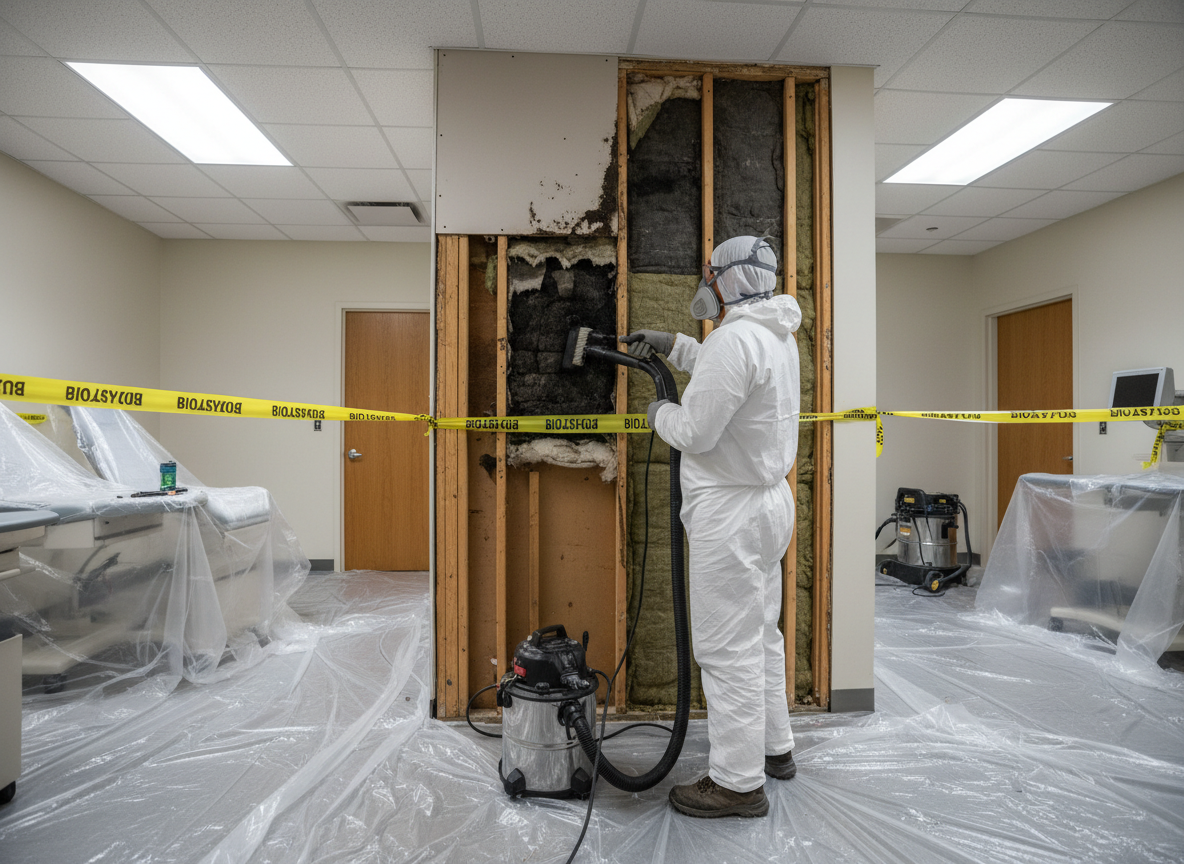
Medical offices in Hattiesburg often feature gypsum drywall installed in the 1980s and 1990s in neighborhoods like University Heights and around the University of Southern Mississippi. Hot summers and frequent afternoon thunderstorms drive moisture behind baseboards and into wall cavities, allowing mold to spread along paper-faced drywall without obvious surface signs. Remediation crews must isolate work zones with negative air machines to protect waiting areas and exam rooms where patients with respiratory conditions are present.
Forrest County medical buildings near Longleaf Trace and the Hattiesburg Zoo frequently sit on slightly sloped lots that direct rainwater toward foundation walls. Once water enters through window sills or HVAC penetrations, it wicks upward into lower drywall courses. Removal requires cutting at least 18 inches above the visible moisture line and treating the cavity with antimicrobial rinses before new moisture-resistant board is installed. Failure to address the hidden moisture source leads to rapid regrowth during the mild winter months when indoor humidity stays elevated.
Air handling systems in these offices run continuously, so any disturbance of moldy drywall can circulate spores through the entire suite. Technicians seal supply and return vents, use HEPA-filtered equipment, and perform post-removal air sampling before the space is returned to patient use. Work is scheduled outside peak clinic hours to avoid disrupting appointments while still completing containment, removal, drying, and verification within the same day when possible.
Technician insight
In Hattiesburg the thing that catches most people out with Medical Office Drywall Mold Removal is how quickly our humid subtropical summers push moisture up from the slab into the lower two feet of drywall in 1980s medical buildings around Oak Grove and the University of Southern Mississippi. Clinics often paint over small spots without addressing the source, so the mold returns within one season.
Oak Grove medical suite after roof leak
A small clinic near Oak Grove reported musty odors in two exam rooms after spring rains. Inspection found water had entered through a roof penetration and wicked into drywall behind cabinets. Crews isolated the rooms, removed the lower sections of drywall, treated the framing, and ran dehumidifiers overnight. Clearance testing the next morning allowed the office to reopen without canceling appointments.
Medical Office Drywall Mold Removal Services We Offer
✓Drywall Moisture Mapping in Clinics
Infrared scanning and moisture meter readings behind exam room walls to locate hidden water intrusion before visible mold appears.
✓Negative Air Containment Setup
Installation of sealed barriers and HEPA negative air machines to isolate mold work zones from patient corridors and waiting rooms.
✓Medical Office Drywall Removal
Controlled cutting and disposal of contaminated drywall sections while maintaining negative pressure throughout the medical suite.
✓Cavity Antimicrobial Treatment
Application of EPA-registered solutions to studs and insulation followed by HEPA vacuuming before new drywall installation.
✓Post-Remediation Air Clearance Testing
Independent spore trap sampling and visual inspection to confirm mold levels meet medical facility standards before reoccupancy.
Medical Office Drywall Mold Removal Cost in Hattiesburg, MS
| Service | Typical Range | What Affects It |
|---|---|---|
| Single exam room drywall removal | $850–$1,400 | Includes containment, removal, treatment, and clearance testing |
| Corridor or waiting area section | $1,200–$2,100 | Larger open spaces increase containment and equipment needs |
| Additional wall cavity drying | $300–$550 | Required when moisture has reached insulation or studs |
Ranges are typical for Hattiesburg, MS and confirmed with an exact written quote before any work starts.
How it works
- 1
Site Assessment
Technicians inspect drywall in affected exam rooms and corridors using moisture meters and thermal imaging while the office remains operational.
- 2
Containment Installation
Plastic barriers and negative air machines are placed to separate the work area from patient spaces before any drywall is disturbed.
- 3
Removal and Cleaning
Moldy drywall sections are removed, cavities are treated, and all debris is bagged and removed through exterior exits.
- 4
Drying and Verification
Dehumidifiers dry the space, followed by air sampling to confirm clearance before barriers are taken down.
Pricing
Costs depend on square footage affected, number of rooms, and whether HVAC cleaning is required. Upfront quotes provided after inspection.