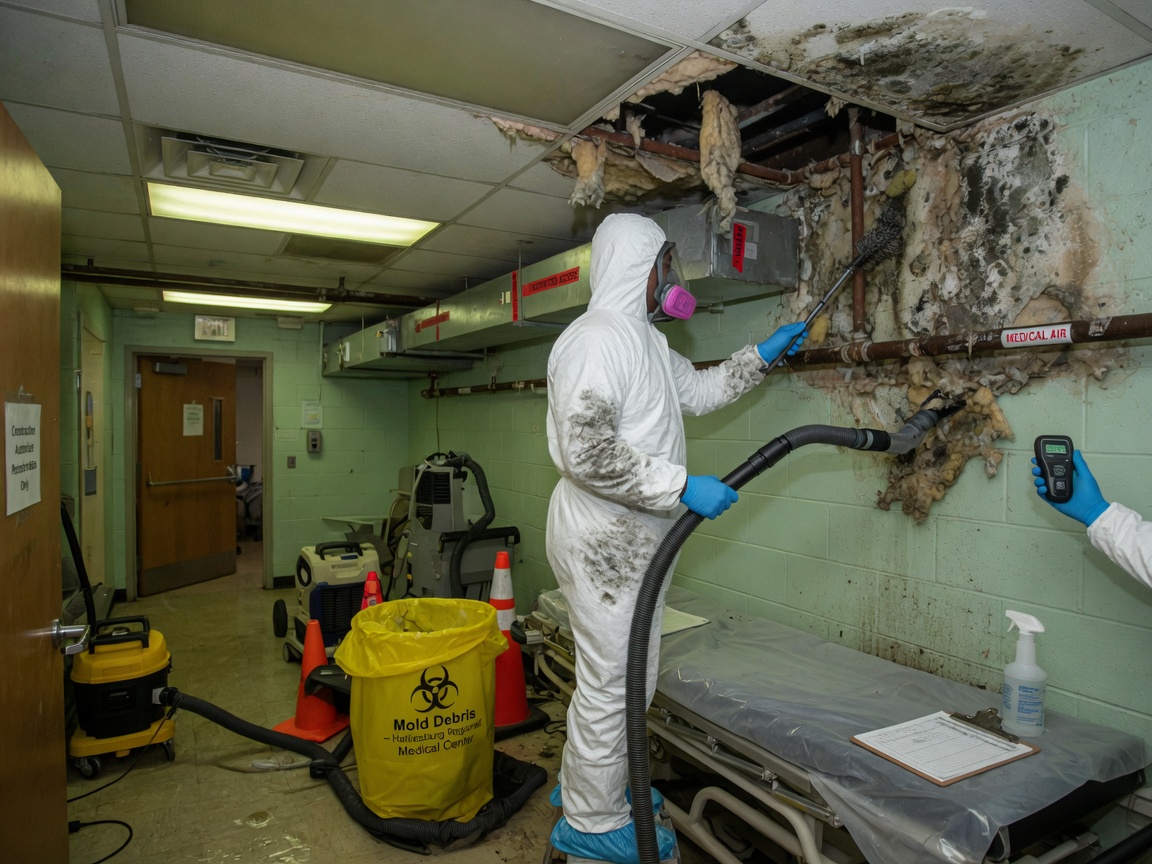
Hattiesburg's humid subtropical climate drives persistent moisture in older medical facilities near the University of Southern Mississippi and along the Longleaf Trace corridor. Healthcare buildings often feature older HVAC ductwork and flat roofs that trap condensation during long hot summers, allowing mold to colonize behind wall panels and above drop ceilings in patient care zones. Containment must account for negative air pressure requirements to protect immunocompromised areas while crews work around active treatment schedules.
Forrest County facilities built before modern moisture barriers commonly experience hidden growth in crawlspaces and utility chases after heavy rains. Removal protocols prioritize HEPA filtration and antimicrobial treatments safe for occupied healthcare environments, avoiding disruption to sterile corridors near the Hattiesburg Zoo vicinity or University Heights clinics. Edge cases include mold migrating through shared wall systems between exam rooms and administrative spaces.
Post-remediation verification uses moisture meters and air sampling calibrated for medical-grade standards, confirming clearance before any area returns to patient use. Local terrain with clay-heavy soils around Oak Grove contributes to poor drainage around foundations, requiring exterior grading corrections alongside interior work to prevent recurrence in mild winter periods when humidity remains elevated.
Technician insight
In Hattiesburg the thing that catches most people out with Healthcare Facility Mold Removal is how the mild winters keep humidity high enough that crawlspaces under older buildings near the University of Southern Mississippi never fully dry, letting mold return through shared chases if exterior grading around clay soils is ignored.
Clinic HVAC Mold in University Heights
A medical clinic near the University of Southern Mississippi reported musty odors in exam rooms after summer humidity spikes. Inspection found mold inside main supply ducts and above ceiling tiles connected to a roof leak. Crews isolated the system, removed contaminated sections, treated remaining ductwork, and corrected drainage at the foundation edge. The facility reopened without further odor issues.
Healthcare Facility Mold Removal Services We Offer
✓HVAC System Mold Remediation in Medical Buildings
Clean and treat ductwork and coils in healthcare HVAC systems to stop spore circulation through patient areas in Hattiesburg facilities.
✓Patient Room Mold Containment and Removal
Isolate and remediate mold in occupied or recently vacated patient rooms while maintaining negative pressure and minimal downtime for Forrest County clinics.
✓Clinic Waiting Area Mold Remediation
Address mold growth in high-traffic reception and waiting zones without closing facilities serving University Heights and Oak Grove patients.
✓Laboratory and Sterile Zone Mold Removal
Handle mold in sensitive lab and procedure rooms using protocols that protect equipment and maintain compliance in local medical settings.
✓Healthcare Facility Crawlspace Mold Treatment
Treat moisture-driven mold in crawlspaces beneath older medical buildings common in The Hub City and surrounding Forrest County areas.
Healthcare Facility Mold Removal Cost in Hattiesburg, MS
| Service | Typical Range | What Affects It |
|---|---|---|
| Initial Facility Assessment | $250–$600 | Larger clinics or multiple wings increase time required. |
| Patient Room Remediation | $800–$2,200 | Varies with wall access and need for temporary relocation. |
| HVAC Ductwork Treatment | $1,200–$3,500 | Older systems near USM often require more sections. |
| Crawlspace Mold Treatment | $900–$2,800 | Drainage issues common in Oak Grove add exterior work. |
Ranges are typical for Hattiesburg, MS and confirmed with an exact written quote before any work starts.
How it works
- 1
Site Assessment
Inspect HVAC, walls, and moisture sources in the healthcare facility while documenting conditions specific to Hattiesburg's climate.
- 2
Containment Setup
Establish negative pressure barriers to isolate affected zones from active patient care areas.
- 3
Mold Removal
Remove contaminated materials and treat surfaces with healthcare-safe antimicrobials.
- 4
Verification and Clearance
Perform moisture and air testing before returning spaces to medical use.
Pricing
Costs depend on square footage, HVAC complexity, and whether patient areas must remain operational during work.