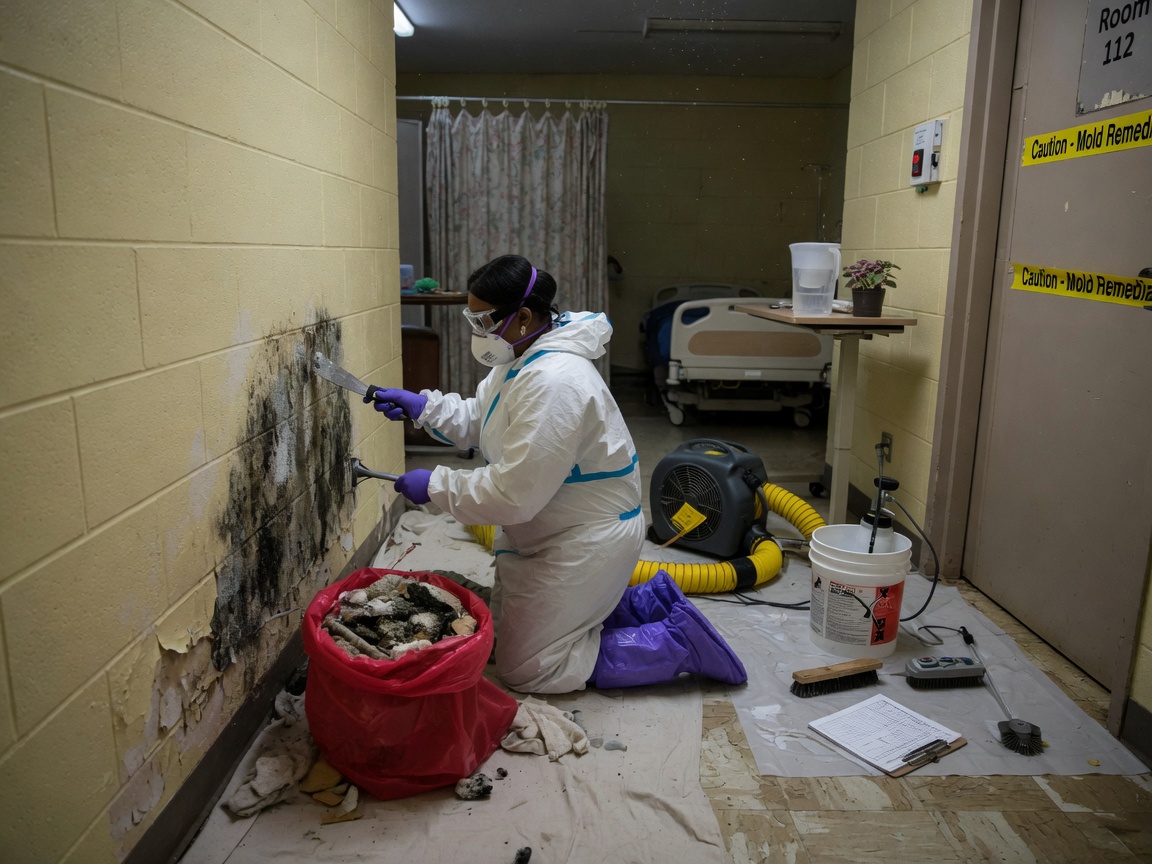
Nursing homes in Forrest County face constant moisture challenges from the region's humid subtropical climate, where hot summers and mild winters keep relative humidity elevated year-round. This leads to condensation inside HVAC systems and wall cavities in older brick and wood-frame structures common in University Heights and The Hub City. Remediation requires negative-air machines with HEPA filtration to protect immunocompromised residents while isolating work zones from occupied hallways and common areas.
Edge cases often involve mold behind vinyl wall coverings or in dropped ceilings above resident rooms near the Hattiesburg Zoo corridor, where poor drainage allows water intrusion during heavy rains. Technicians must coordinate with facility maintenance to avoid disrupting medication schedules or meal services. All work follows CDC environmental infection-control guidelines for healthcare settings, including post-remediation air sampling to confirm spore counts return to background levels before reoccupancy.
Containment barriers use fire-rated plastic and zippered doors to maintain pressure differentials, especially critical in buildings along the Longleaf Trace where older construction lacks modern vapor barriers. Materials removed include saturated insulation and drywall sections, with disposal handled through permitted local landfills. Follow-up moisture mapping with infrared cameras identifies remaining risk areas around plumbing chases that standard visual inspections miss.
Technician insight
In Hattiesburg the thing that catches most people out with Nursing Home Mold Remediation is how the mild winters still let humidity sit inside older brick buildings in University Heights. Facilities along US-11 often have roof leaks that go unnoticed until mold reaches resident rooms because the flat terrain around Petal doesn't drain well after summer storms.
Hidden Growth in Oak Grove Nursing Home HVAC
Staff noticed musty odors near the dining hall after heavy spring rains. Inspection found condensation inside the main air handler serving the east wing. Containment was set around the unit and adjacent hallway; the coil and insulation were replaced and the system was cleaned. Clearance sampling showed levels matched outdoor air the next day.
Nursing Home Mold Remediation Services We Offer
✓HVAC System Mold Remediation
Removes mold from air handlers and ductwork in nursing homes while maintaining negative pressure to prevent spore migration into resident corridors.
✓Resident Room Containment and Removal
Isolates individual rooms with sealed barriers and extracts mold from walls or flooring without relocating bed-bound patients when possible.
✓Common Area Ceiling Mold Treatment
Addresses growth above dropped ceilings in dining halls and activity rooms common in Oak Grove facilities where roof leaks meet high indoor humidity.
✓Post-Flood Wall Cavity Drying
Dries and treats wall cavities after storm-related water intrusion that frequently affects older nursing homes in The Hub City during mild winters.
✓Air Sampling and Clearance Testing
Provides pre- and post-remediation spore counts to verify safe conditions before reopening affected nursing home sections.
Nursing Home Mold Remediation Cost in Hattiesburg, MS
| Service | Typical Range | What Affects It |
|---|---|---|
| Single Room Assessment and Containment | $350–$650 | Higher when ceiling access requires scaffolding |
| HVAC Ductwork Remediation | $1,200–$2,800 | Varies by number of air handlers and duct length |
| Full Wing Remediation | $4,500–$9,500 | Includes multiple rooms and common-area ceilings |
| Clearance Air Sampling | $250–$450 | Per set of samples; required for regulatory documentation |
Ranges are typical for Hattiesburg, MS and confirmed with an exact written quote before any work starts.
How it works
- 1
Initial Assessment
Technicians inspect HVAC, walls, and ceilings using moisture meters and borescopes while reviewing facility maintenance logs for past leaks.
- 2
Containment Setup
Fire-rated barriers and negative-air machines isolate the work zone from resident traffic routes in the building.
- 3
Removal and Cleaning
Affected materials are removed, surfaces are treated with EPA-registered antimicrobials, and HVAC components are cleaned.
- 4
Verification and Clearance
Air and surface sampling confirms spore levels match outdoor baselines before barriers are removed.
Pricing
Costs depend on square footage affected, HVAC access, and whether multiple wings require isolation.