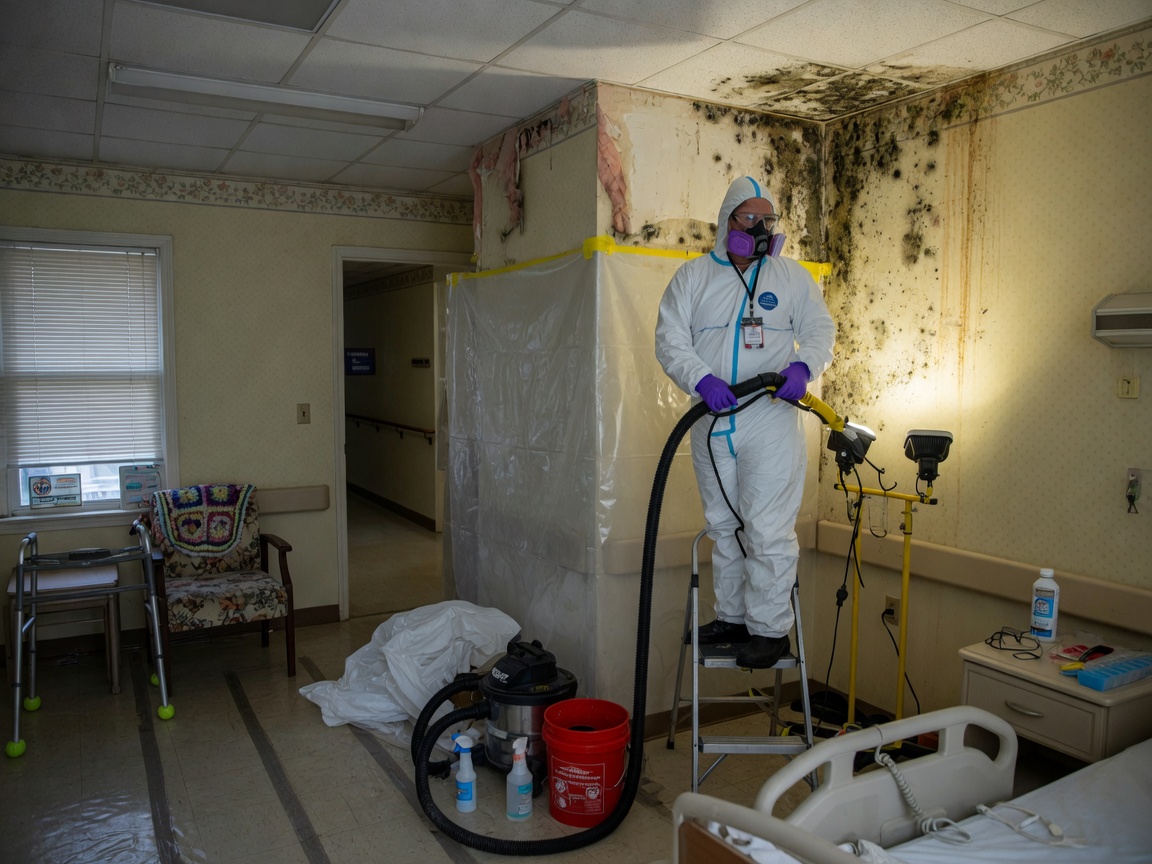
Assisted living facilities in Hattiesburg face persistent mold risks due to the humid subtropical climate with hot summers and mild winters that keep indoor moisture levels elevated year-round. Older structures common near the University of Southern Mississippi and in University Heights often feature aging HVAC systems and porous materials like drywall and carpet that trap spores after roof leaks or flooding from heavy rains. Remediation crews must isolate resident areas quickly to protect vulnerable occupants while addressing wall cavities and shared corridors without disrupting daily care routines.
In Forrest County facilities around Oak Grove and along the Longleaf Trace corridor, water intrusion frequently occurs at ground level where clay-heavy soils retain moisture against foundations. Technicians inspect for hidden growth behind baseboards and in ceiling plenums, using containment barriers and negative air machines to prevent cross-contamination into resident rooms. Protocols require removal of affected porous materials rather than encapsulation alone, followed by HEPA cleaning of all surfaces and verification through post-remediation sampling before reoccupancy.
Edge cases in these settings include mold regrowth inside linen closets or behind headboards in resident rooms where poor ventilation combines with the area's frequent summer humidity spikes. Crews coordinate with facility maintenance to adjust HVAC dehumidification settings during work and recommend ongoing monitoring of crawl spaces common in mid-century buildings near the Hattiesburg Zoo. All work follows EPA guidelines for healthcare-adjacent environments while minimizing disruption to staff and residents.
Technician insight
In Hattiesburg, the thing that catches most people out with Assisted Living Facility Mold Removal is how quickly spores spread through shared HVAC in older buildings near the University of Southern Mississippi when summer humidity stays high and dehumidification lags.
Oak Grove Facility After Summer Leak
Staff noticed musty odors in several resident rooms following heavy rains. Inspection revealed hidden growth in wall cavities along an exterior corridor where clay soil held moisture against the foundation. Crews isolated the wing, removed affected drywall, treated the HVAC, and cleared the space with sampling within five days.
Assisted Living Facility Mold Removal Services We Offer
✓HVAC Mold Remediation
Clean and treat ductwork and coils in assisted living HVAC systems to stop spore circulation through shared living spaces.
✓Wall Cavity Inspection and Removal
Open and treat hidden mold behind walls and baseboards common in older Forrest County facilities after leaks.
✓Resident Room Containment
Set up sealed barriers and negative air to isolate mold work from occupied rooms without interrupting care.
✓Foundation Moisture Control
Address ground-level moisture intrusion from clay soils affecting facilities in Oak Grove and University Heights.
✓Post-Remediation Verification
Perform air and surface sampling after cleanup to confirm safe conditions before residents return to treated areas.
Assisted Living Facility Mold Removal Cost in Hattiesburg, MS
| Service | Typical Range | What Affects It |
|---|---|---|
| Initial Facility Assessment | $250–$600 | Larger multi-wing buildings or after-hours access increase cost. |
| Single Resident Room Remediation | $800–$1,800 | Depends on wall cavity extent and material removal needs. |
| HVAC System Cleaning | $1,200–$3,500 | Varies by number of air handlers and duct length. |
| Full Floor Containment And Cleanup | $4,000–$9,000 | Driven by square footage and resident relocation requirements. |
Ranges are typical for Hattiesburg, MS and confirmed with an exact written quote before any work starts.
How it works
- 1
Site Assessment
Inspect HVAC, walls, and moisture sources throughout the facility while documenting affected areas.
- 2
Containment Setup
Install barriers and negative air machines to isolate work zones from resident and staff traffic.
- 3
Material Removal
Extract contaminated drywall, insulation, and porous items, then clean remaining surfaces with HEPA equipment.
- 4
Drying And Treatment
Apply antimicrobial solutions and dehumidify spaces to prevent regrowth in the local humid climate.
- 5
Verification And Clearance
Conduct sampling and provide documentation before releasing areas back to facility use.
Pricing
Costs depend on facility size, number of affected rooms, and HVAC complexity.