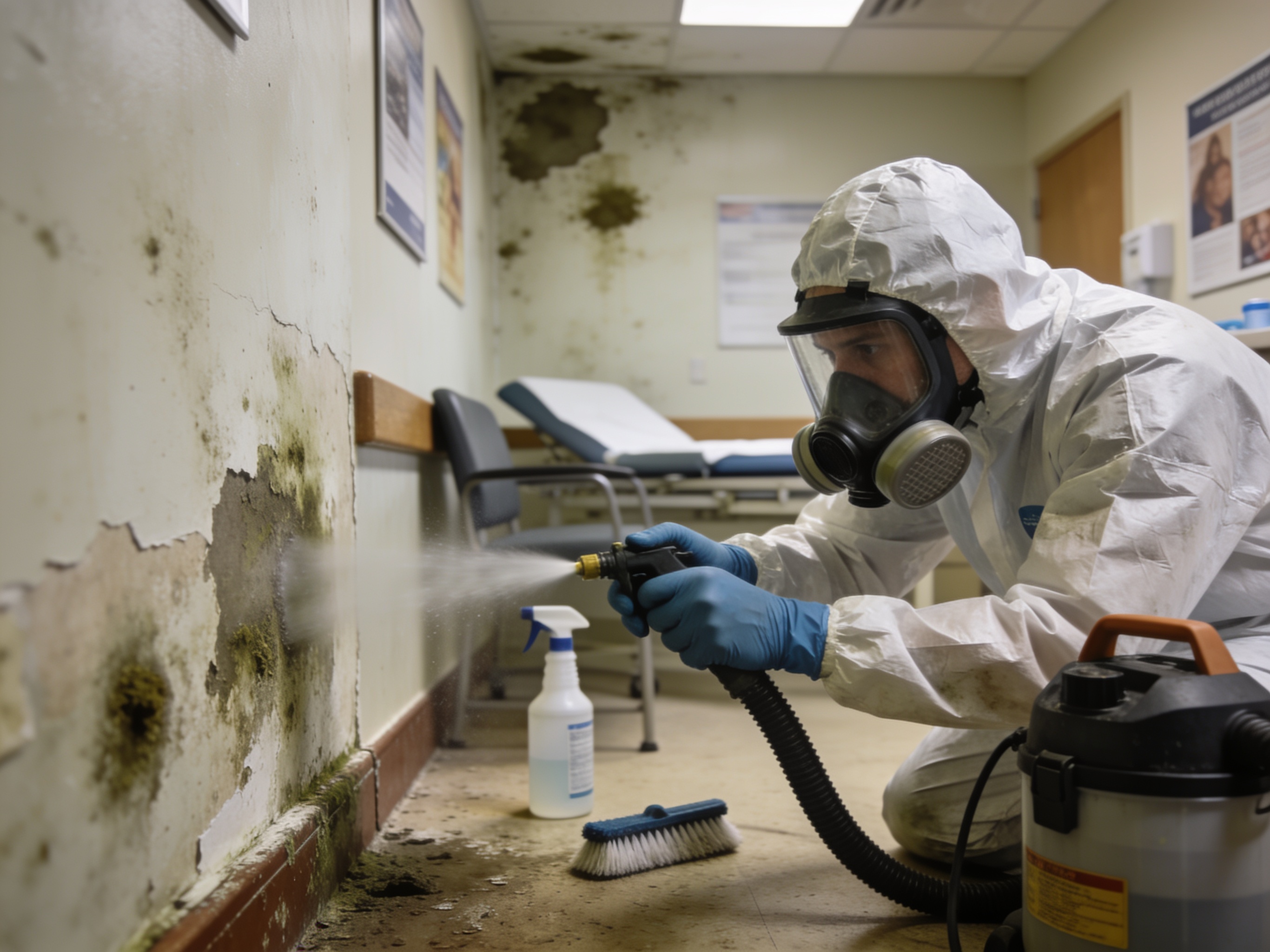
Hattiesburg's humid subtropical climate keeps indoor humidity high year-round, allowing mold to take hold behind cabinetry, in HVAC returns, and under exam room flooring in clinics built before the 1990s. Buildings near the University of Southern Mississippi and in University Heights often have older ductwork and flat roofs that trap moisture after summer storms, requiring negative-pressure containment and medical-grade HEPA filtration before any demolition begins. Technicians must isolate patient corridors to prevent spore migration into waiting areas or procedure rooms.
Forrest County clinics frequently request work during off-hours to avoid disrupting appointments. Edge cases include hidden growth inside wall cavities adjacent to restrooms or break rooms where condensation lines leak unnoticed. Remediation follows IICRC S520 protocols adapted for healthcare, with post-remediation air sampling required before reopening spaces. Materials such as antimicrobial encapsulants are selected only after confirming compatibility with medical surfaces and equipment.
Work in Oak Grove and The Hub City clinics often involves coordinating with facility managers to maintain emergency egress routes during containment setup. Terrain around Longleaf Trace contributes to higher groundwater levels that can affect slab-on-grade foundations, pushing moisture upward through expansion joints. Seasonal mild winters extend the window for hidden growth because heating systems run less frequently, allowing humidity to persist inside wall assemblies.
Technician insight
In Hattiesburg the thing that catches most people out with Outpatient Clinic Mold Remediation is older slab foundations in buildings near the University of Southern Mississippi that wick moisture from the high water table around Longleaf Trace, letting mold grow under vinyl flooring long before visible signs appear in exam rooms.
Oak Grove Clinic Restroom Leak
Staff noticed musty odors near two exam rooms after heavy summer rain. Inspection revealed a slow leak from a condensate line that had wetted the subfloor and base of a shared wall. Containment was erected overnight, affected materials removed, and the slab dried before new flooring was installed; clearance samples passed and the clinic reopened on schedule.
Outpatient Clinic Mold Remediation Services We Offer
✓Negative Pressure Containment Setup
Install sealed barriers and HEPA-filtered air machines to isolate mold-affected zones from active patient corridors and waiting areas.
✓Medical HVAC Duct Cleaning
Remove mold and debris from clinic ventilation systems serving exam rooms while protecting adjacent occupied spaces.
✓Post-Remediation Clearance Testing
Perform independent air and surface sampling to verify spore counts meet healthcare facility reopening standards.
✓Slab Moisture Mapping
Use moisture meters and infrared imaging to locate hidden water intrusion beneath clinic exam room floors common in older Forrest County buildings.
✓Antimicrobial Encapsulation
Apply EPA-registered coatings to treated surfaces in treatment rooms to inhibit future growth without affecting medical equipment.
Outpatient Clinic Mold Remediation Cost in Hattiesburg, MS
| Service | Typical Range | What Affects It |
|---|---|---|
| Small exam room remediation | $2,800–$5,200 | Increases with HVAC tie-in or hidden wall growth |
| Waiting area and corridor containment | $4,500–$8,100 | Higher when multiple zones require isolation |
| HVAC system cleaning add-on | $1,900–$3,400 | Depends on duct length and access points |
| Clearance testing package | $650–$950 | Includes air and surface samples with lab report |
Ranges are typical for Hattiesburg, MS and confirmed with an exact written quote before any work starts.
How it works
- 1
Initial Assessment
Inspect affected clinic areas, document moisture sources, and map containment needs while the facility remains operational.
- 2
Containment and Air Filtration
Erect negative-pressure barriers and run HEPA scrubbers to capture airborne spores before any removal work starts.
- 3
Source Removal
Remove and dispose of contaminated materials, clean surfaces, and address underlying leaks in walls or HVAC components.
- 4
Clearance and Documentation
Conduct final sampling, provide written reports, and confirm the space meets standards for patient use.
Pricing
Costs depend on square footage, HVAC involvement, and required after-hours scheduling; estimates provided after onsite visit.