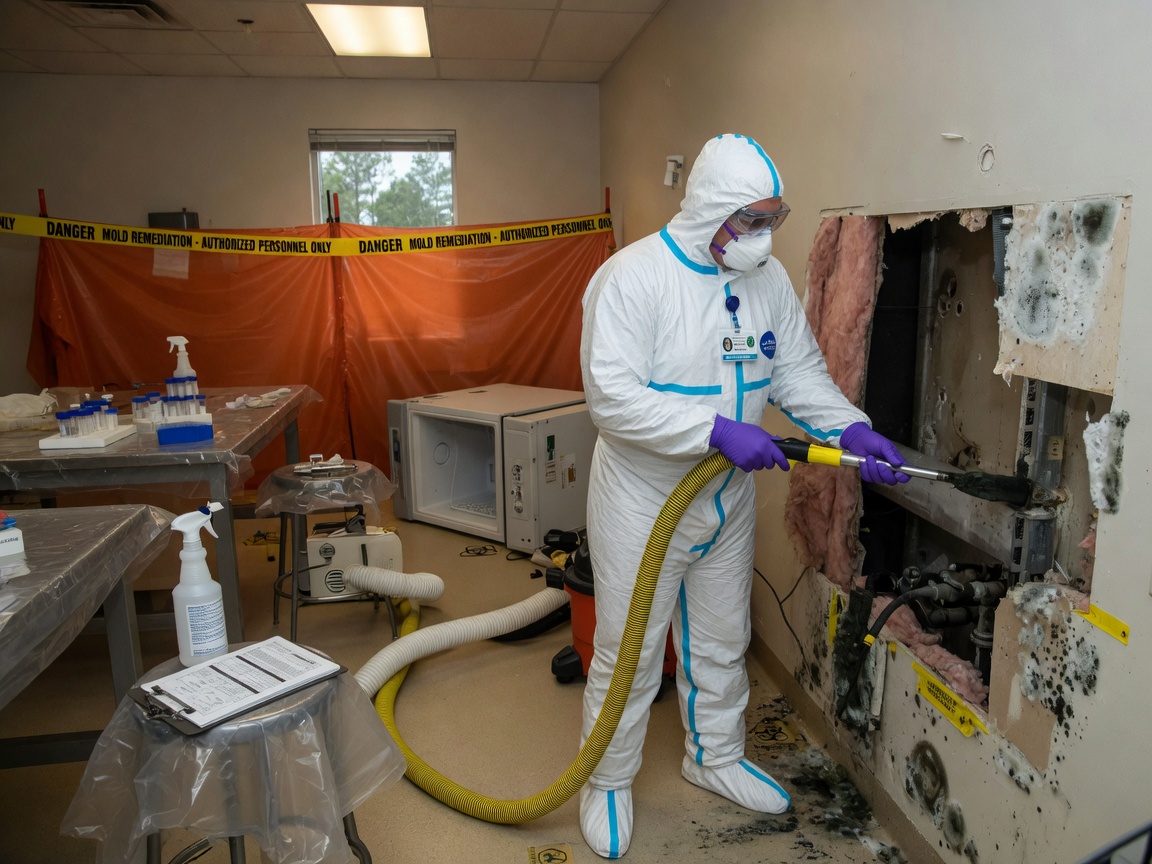
Hattiesburg's humid subtropical climate brings extended hot summers that drive moisture into medical lab HVAC systems and wall cavities, especially in older buildings around the University of Southern Mississippi and University Heights. Labs in these areas often sit on slabs or crawlspaces where mild winters allow condensation to linger, creating hidden growth behind casework and under benchtops. Remediation here requires negative air machines running continuously to protect sterile zones while removing affected materials without cross-contaminating adjacent patient areas.
Medical labs demand higher containment than standard commercial jobs because even small spore releases can compromise research or diagnostic results. We isolate work zones with 6-mil poly barriers sealed at every seam, run HEPA-filtered negative pressure at 0.02 inches of water column, and monitor with particle counters before breaking down barriers. In Forrest County facilities near the Longleaf Trace, we also account for seasonal pollen loads that can mask or complicate post-remediation clearance testing.
Edge cases appear frequently in Oak Grove labs where roof leaks around mechanical penetrations feed mold into ceiling plenums above clean rooms. Removing these requires dismantling sections of drop ceilings while maintaining airflow separation from occupied corridors. All debris exits through dedicated decontamination chambers, and we leave surfaces ready for third-party verification sampling rather than applying sealants that could interfere with lab protocols.
Technician insight
In Hattiesburg, the thing that catches most people out with Medical Laboratory Mold Remediation is how the constant humidity from our subtropical summers pushes moisture into slab edges and older ductwork in University Heights buildings near USM, turning small ceiling stains into widespread plenum growth before anyone notices.
University Heights Lab Ceiling Issue
A diagnostic lab near the University of Southern Mississippi noticed musty odors after heavy spring rains. Inspection found mold in the ceiling plenum above the main testing bench fed by a slow roof leak. We isolated the zone, removed affected tiles and insulation, cleaned the duct runs, and restored airflow separation. Clearance samples passed and the lab reopened without interrupting patient testing schedules.
Medical Laboratory Mold Remediation Services We Offer
✓Negative Pressure Containment Setup
Install sealed barriers and negative air machines to isolate mold work zones from active lab spaces without disrupting ongoing medical operations.
✓HVAC Duct Mold Removal
Clean and treat mold inside laboratory ventilation systems while protecting sensitive equipment and maintaining required air quality standards.
✓Benchtop and Casework Remediation
Remove mold from lab furniture and underlying substrates in research and diagnostic areas with minimal disruption to workflow.
✓Ceiling Plenum Mold Extraction
Access and remediate hidden growth above suspended ceilings in medical labs while preserving sterile conditions below.
✓Post-Remediation Clearance Support
Prepare surfaces and documentation for independent air and surface sampling required by medical facility protocols.
Medical Laboratory Mold Remediation Cost in Hattiesburg, MS
| Service | Typical Range | What Affects It |
|---|---|---|
| Small Lab Containment And Removal | $1,200–$2,800 | Single room or limited HVAC work |
| Medium Lab Full Remediation | $2,900–$5,500 | Multiple rooms plus duct cleaning |
| Large Lab Or Multi-Zone Project | $5,800–$11,000 | Complex containment across several areas |
| Emergency After-Hours Response | $400–$900 | Added to base remediation for weekend or evening calls |
Ranges are typical for Hattiesburg, MS and confirmed with an exact written quote before any work starts.
How it works
- 1
Site Assessment
Inspect all affected lab zones, HVAC paths, and adjacent areas to map moisture sources and containment needs.
- 2
Containment Installation
Erect sealed barriers, set up negative air, and establish decontamination routes before any removal begins.
- 3
Material Removal And Cleaning
Extract mold-damaged materials, HEPA vacuum surfaces, and treat remaining substrates with approved antimicrobials.
- 4
Clearance And Documentation
Verify conditions meet lab standards and provide records for facility compliance files.
Pricing
Costs depend on lab square footage, HVAC involvement, and extent of hidden growth. Upfront quotes provided after assessment.