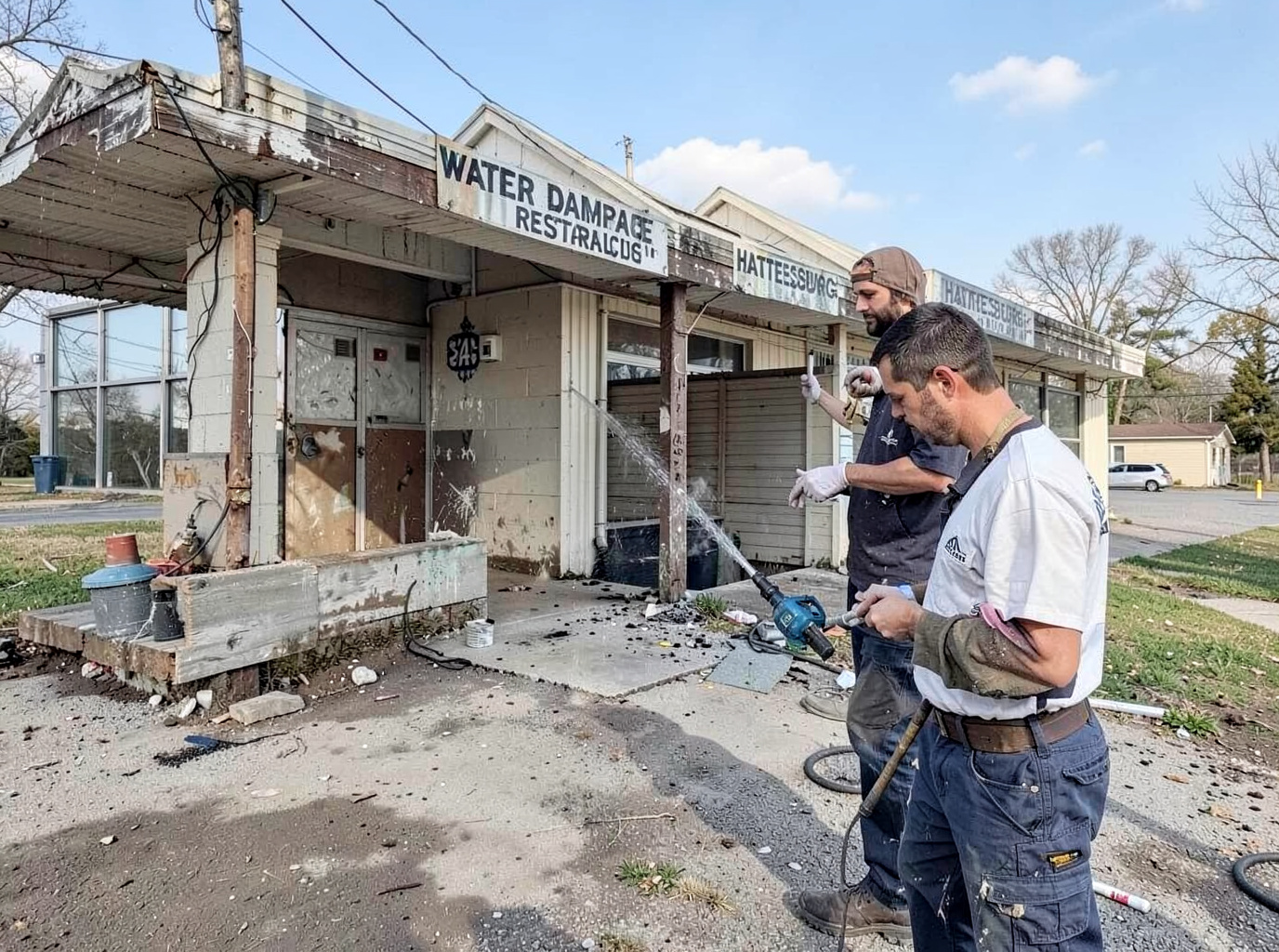
Medical facilities in Hattiesburg face unique risks after water intrusion because the humid subtropical climate with hot summers accelerates microbial growth on porous surfaces like drywall and carpet backing. In older structures common around University Heights and near the University of Southern Mississippi, leaks from aging plumbing or roof penetrations often travel behind walls and into HVAC returns, creating hidden reservoirs that standard drying methods miss. Restoration crews must isolate affected zones with negative air machines and HEPA filtration to protect patient areas while complying with strict infection-control protocols that differ from residential jobs.
Forrest County terrain and seasonal patterns add complications during restoration. Mild winters keep soil moisture high around foundations in Oak Grove neighborhoods, allowing groundwater seepage into lower-level storage or lab spaces even without heavy rain. When Category 2 or 3 water affects pharmacies or exam rooms, crews remove saturated materials quickly, then use moisture meters and thermal imaging to locate residual dampness in concrete slabs or under medical cabinetry that could otherwise trigger mold colonies within 48 hours.
Edge cases frequently involve electrical rooms or sterile supply areas where water contacts wiring or packaging. Technicians de-energize circuits, extract standing water with truck-mounted units, then apply antimicrobial treatments only after verifying compatibility with sensitive equipment. Documentation of every step supports facility reporting requirements, and final clearance testing confirms humidity levels stay below thresholds that promote spore reactivation during the long summer months.
Technician insight
In Hattiesburg the thing that catches most people out with Medical Facility Water Damage Restoration is how the humid subtropical climate keeps crawl spaces and slab edges damp year-round, so a small leak near Longleaf Trace medical offices can push moisture into subflooring and trigger hidden mold colonies before anyone notices the smell.
Water leak in University Heights medical office
A roof drain backed up during summer rains and sent water into a second-floor lab near the University of Southern Mississippi. Crews found saturated insulation above the ceiling and moisture tracking down interior walls into an adjacent exam room. They isolated the zone, extracted water, removed affected materials, and dried the structure over five days until readings stayed within medical guidelines.
Medical Facility Water Damage Restoration Services We Offer
✓Clinic Water Extraction
Rapid removal of standing water from exam rooms and waiting areas using extraction equipment sized for medical traffic patterns to limit downtime.
✓Hospital HVAC Moisture Removal
Targeted drying and cleaning of ductwork and air handlers in medical buildings to prevent mold circulation through shared ventilation systems.
✓Pharmacy Flood Cleanup
Containment and removal of water from dispensing and storage zones while protecting controlled substances and maintaining chain-of-custody records.
✓Medical Equipment Drying
Safe moisture extraction from diagnostic machines and exam tables using non-conductive methods followed by verification that no hidden dampness remains.
✓Surgical Suite Restoration
Negative-pressure isolation and material replacement in operating rooms to restore sterile conditions after plumbing or sprinkler activation.
Medical Facility Water Damage Restoration Cost in Hattiesburg, MS
| Service | Typical Range | What Affects It |
|---|---|---|
| Small exam room water extraction | $1,200–$2,800 | Varies with hidden wall or ceiling damage |
| HVAC system drying in clinic | $2,500–$6,000 | Depends on number of air handlers and duct length |
| Pharmacy area restoration | $3,000–$7,500 | Influenced by inventory protection needs and clearance testing |
| Surgical suite water response | $4,500–$9,000 | Higher when negative pressure and sterile protocols apply |
Ranges are typical for Hattiesburg, MS and confirmed with an exact written quote before any work starts.
How it works
- 1
Initial Assessment
Technicians inspect the medical facility for water migration paths, document affected zones, and identify any immediate risks to patient care areas.
- 2
Containment and Extraction
Barriers are erected and standing water is removed with HEPA-filtered equipment to prevent cross-contamination into clean zones.
- 3
Drying and Monitoring
Industrial dehumidifiers and air movers dry structural materials while daily moisture readings track progress until targets are met.
- 4
Final Clearance
Independent testing confirms humidity and mold levels meet medical standards before areas return to service.
Pricing
Costs depend on square footage affected, water category, and equipment access in active medical spaces; quotes provided during listed business hours.