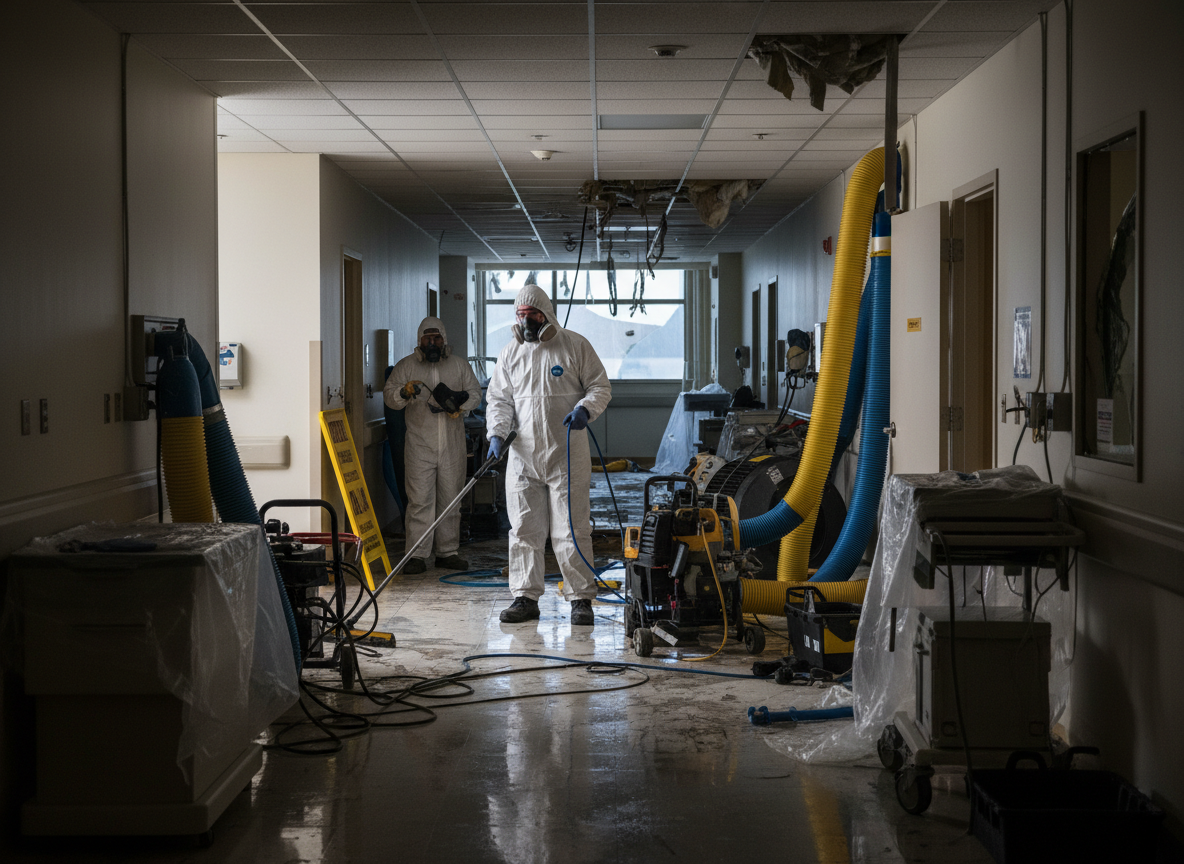
Hattiesburg's humid subtropical climate with hot summers and mild winters keeps relative humidity elevated for months, driving moisture deep into older brick and wood-frame medical buildings common in University Heights and Oak Grove. Healthcare facilities often feature sealed corridors, vinyl composition tile over concrete slabs, and HVAC systems that recirculate air, so trapped moisture behind walls or under flooring can migrate into adjacent exam rooms within days. We use industrial desiccant dehumidifiers and air movers calibrated for medical environments to pull vapor without creating pressure differentials that could spread contaminants.
Forrest County clinics frequently sit on low-lying terrain near the Longleaf Trace corridor where seasonal rains and poor drainage saturate crawl spaces beneath older structures. In these settings, structural drying must account for metal stud cavities and gypsum board that absorb and hold water far longer than residential drywall. Technicians isolate zones with temporary barriers, monitor moisture content with pin and pinless meters, and adjust equipment daily because afternoon thunderstorms can reintroduce humidity through roof penetrations or window seals common in buildings near the University of Southern Mississippi.
Edge cases include drying around sensitive imaging equipment and pharmacy storage where temperature swings from dehumidification could affect calibration or medication stability. We route exhaust air outside the building envelope and maintain negative pressure only in affected zones to comply with healthcare operational needs. Continuous logging of temperature, humidity, and moisture readings provides documentation that facility managers can review before reopening spaces.
Technician insight
In Hattiesburg the thing that catches most people out with Healthcare Facility Structural Drying is how quickly afternoon humidity re-wets surfaces in buildings along the Longleaf Trace where older slab-on-grade construction in University Heights clinics lets moisture wick back up through tile joints days after equipment is pulled.
Oak Grove Clinic After Roof Leak
Water entered through a compromised seam above a waiting area in an Oak Grove medical office. Mapping showed saturation extending into two exam rooms and under the reception desk. Directed drying with contained equipment restored the spaces without closing the clinic during weekday hours.
Healthcare Facility Structural Drying Services We Offer
✓Healthcare Clinic Moisture Extraction
Removes standing and bound water from exam rooms and corridors using low-profile extraction tools that avoid disrupting patient flow in active Hattiesburg medical offices.
✓Medical Building Wall Cavity Drying
Targets hidden moisture in stud bays and behind cabinetry common in older University Heights healthcare structures with directed airflow and inline filtration.
✓Hospital Flooring System Drying
Addresses saturation under vinyl tile and subflooring in high-traffic areas near Oak Grove facilities where slab moisture can migrate into adjacent departments.
✓Healthcare HVAC Duct Drying
Dries condensate lines and ductwork in facilities around the University of Southern Mississippi to stop microbial growth without full system shutdown.
✓Post-Storm Structural Drying for Clinics
Manages widespread moisture from roof leaks or flooding in Forrest County medical buildings after heavy rains typical of the region's subtropical pattern.
Healthcare Facility Structural Drying Cost in Hattiesburg, MS
| Service | Typical Range | What Affects It |
|---|---|---|
| Single exam room drying | $900–$1,800 | Varies with wall cavity access and HVAC involvement |
| Corridor and adjacent rooms | $2,200–$4,500 | Increases with length of containment needed |
| Crawl space or slab moisture | $1,500–$3,200 | Higher in older Oak Grove buildings with poor drainage |
| HVAC component drying | $800–$1,600 | Depends on duct length and access points |
Ranges are typical for Hattiesburg, MS and confirmed with an exact written quote before any work starts.
How it works
- 1
Initial Moisture Mapping
Technicians survey the facility with meters and thermal imaging to locate all affected zones in walls, floors, and HVAC components.
- 2
Zone Isolation
Temporary barriers and negative air setups contain the work area while allowing continued operation of unaffected patient spaces.
- 3
Equipment Deployment
Desiccant dehumidifiers and air movers are positioned and adjusted daily based on real-time readings from the humid local climate.
- 4
Verification and Handover
Final moisture checks confirm dry standards before barriers are removed and the space is returned to healthcare use.
Pricing
Costs depend on square footage affected, depth of moisture, and whether work occurs during operating hours.