2026-10-14 ·
How to Prepare Healthcare Spaces for Mold Remediation in Hattiesburg
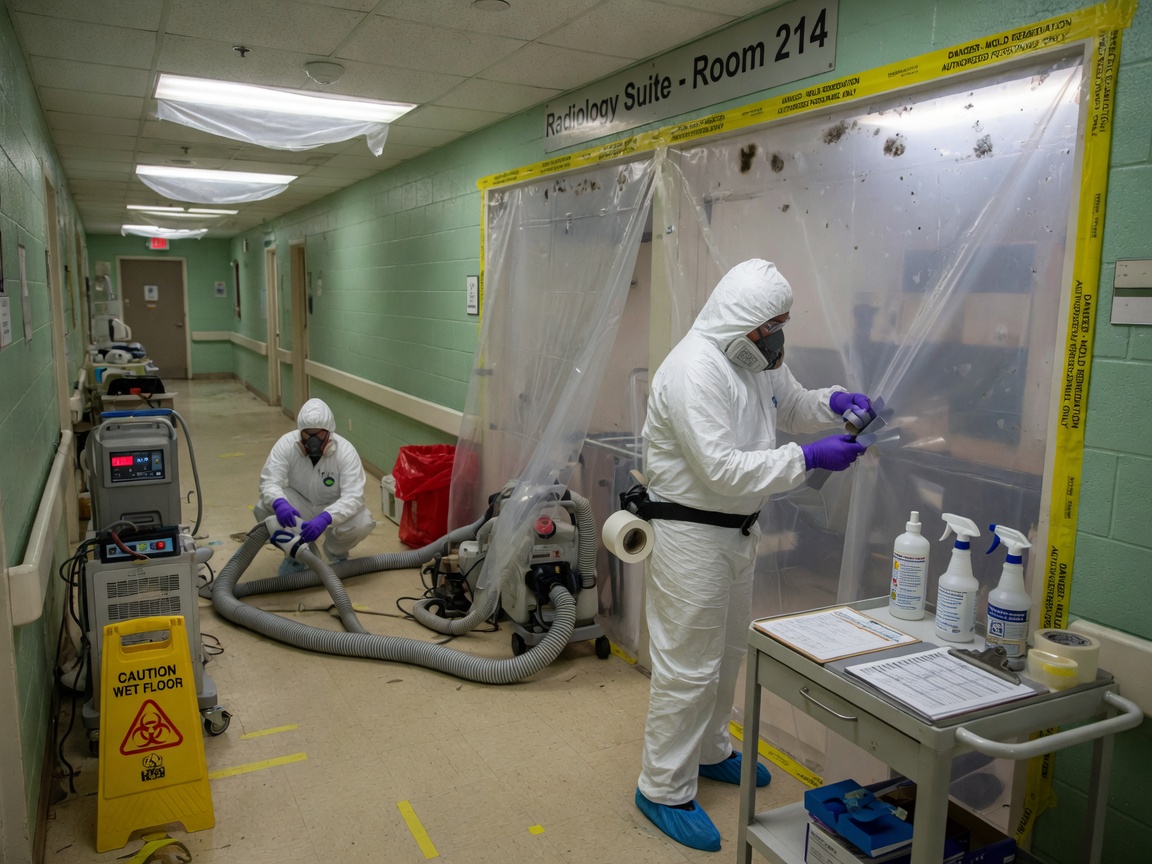
Preparing healthcare spaces for mold remediation in Hattiesburg begins with isolating the affected zones and scheduling work during low-occupancy periods to limit disruption to patient care. Staff must clear movable equipment and supplies from the work area at least 24 hours ahead, while HVAC systems serving those zones need temporary shutdown or redirection. These initial actions reduce cross-contamination risks in buildings common to The Hub City and University Heights.
Assessing the Facility Before Work Starts
A thorough walkthrough identifies moisture sources tied to Hattiesburg’s humid subtropical climate, where hot summers and mild winters keep indoor humidity elevated year-round. Inspectors check ceilings, drywall, and HVAC components in spaces near the University of Southern Mississippi or along the Longleaf Trace corridor, where older construction often traps condensation. Documenting these conditions helps crews plan containment that matches the layout of medical offices or clinics in Oak Grove and surrounding Forrest County neighborhoods. Staff should also note any recent heavy rains that have affected the Hattiesburg Zoo vicinity, since water intrusion patterns differ between slab-on-grade and raised-floor buildings. This assessment phase typically takes one to two days and prevents surprises once remediation crews arrive.
Coordinating Staff and Patient Schedules
Notification timelines matter in active healthcare settings. Facilities should alert personnel and schedule non-urgent appointments around the remediation window, often limiting work to evenings or weekends when patient volume drops. In University Heights and West Hattiesburg locations, parking and access routes must remain clear for equipment delivery to the site at 874 US-11 in nearby Petal. Temporary barriers and negative-air machines require electrical coordination so that essential medical equipment stays powered. Clear signage and alternate pathways keep foot traffic away from containment zones without violating infection-control standards common to local outpatient clinics.
Managing HVAC and Airflow in Local Conditions
Hattiesburg’s climate drives the need to isolate HVAC runs early. Crews seal supply and return ducts serving the work area to stop spore migration through shared systems found in many medical buildings near the Longleaf Trace. Portable dehumidifiers sized for the square footage help maintain target humidity levels below 50 percent during the project. Facilities in Oak Grove and Rawls Springs often face higher baseline moisture because of nearby water tables, so extra drying time is built into the schedule. Coordination with the remediation team ensures these steps align with the full scope outlined in healthcare facility mold removal projects.
Final Walk-Through and Documentation
Once containment is in place, a final review confirms that all listed preparation items are complete. Teams photograph sealed entries, relocated equipment, and HVAC modifications for the project file. This record supports post-remediation verification and helps staff understand when normal operations can resume. In Forrest County healthcare settings, these documented steps reduce the chance of delays caused by overlooked moisture pockets that the region’s mild winters can hide until summer humidity returns.